Restoring a Water-Damaged Property Safely and Completely
A burst pipe, failed water heater, or storm leak can turn a dry building into a technical emergency within hours. Water moves through flooring, wall cavities, insulation, and contents long after the visible puddle disappears, making a quick but incomplete cleanup risky.
Water Damage Restoration involves controlling the source, assessing contamination, extracting water, drying the structure, cleaning affected materials, and repairing the property. In Centennial and throughout the Denver metro area, sudden temperature shifts, freezing conditions, and intense storms can create both plumbing and exterior water losses.
The safest response is documented and methodical rather than purely cosmetic. Restoration Logistics Centennial can be part of the evaluation process, but property owners should understand what professional restoration includes before authorizing work.
What Water Damage Restoration Actually Involves
Restoration is more than pumping out standing water. A complete project may include:
- Stopping or isolating the water source.
- Inspecting the building and identifying hidden saturation.
- Removing standing and absorbed water.
- Drying structural materials with air movement and dehumidification.
- Cleaning, sanitizing, and deodorizing surfaces and contents.
- Removing unsalvageable materials.
- Rebuilding drywall, insulation, flooring, cabinets, trim, or other finishes.
Mitigation limits immediate spread and secondary damage. Extraction, temporary roof protection, controlled demolition, and emergency drying are mitigation activities. Restoration returns the property to a safe, functional condition through repairs, replacement, and finish work.
Prompt action matters because wet gypsum board can lose integrity, wood can swell or distort, adhesives can fail, and odors can develop. Damp materials also create conditions favorable to microbial growth. Professional help is particularly appropriate when saturation is widespread, water is contaminated, moisture is concealed, or electrical systems may be affected. Do not enter standing water near energized equipment.
Recognizing the Type and Extent of the Damage
Technicians begin by determining three things: where the water came from, how contaminated it is, and how difficult the affected materials will be to dry.
Common sources include:
- Burst or leaking supply pipes.
- Appliance hoses, washing machines, dishwashers, and water heaters.
- Roof, window, siding, or flashing failures.
- Storm flooding and groundwater intrusion.
- Sewer backups and drain overflows.
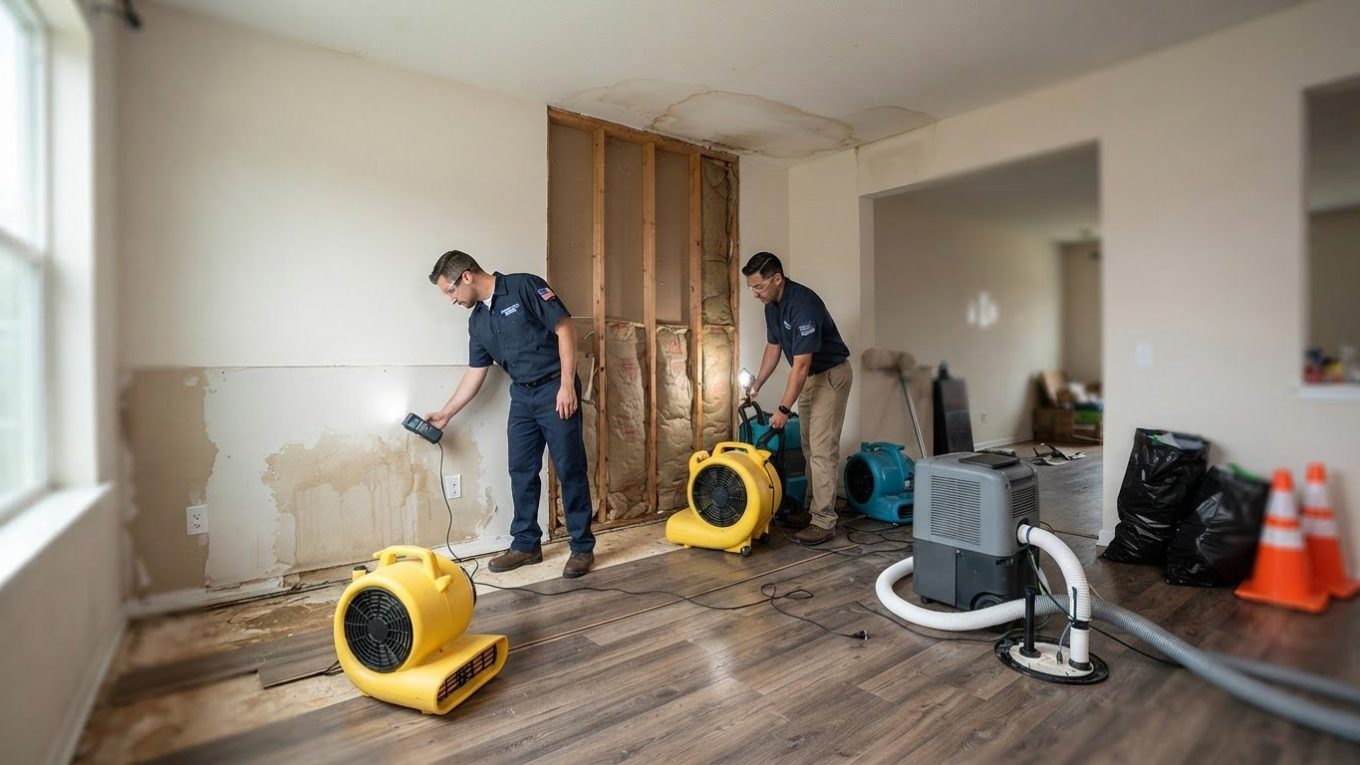
Visible signs include staining, bubbling paint, swollen trim, warped flooring, damp insulation, musty odors, and unusually high indoor humidity. Concealed moisture may be present behind walls, beneath flooring, inside cabinets, or below appliances. Infrared cameras can help identify temperature patterns associated with moisture, but technicians confirm findings with penetrating and non-penetrating moisture meters.
Water classification affects containment, personal protective equipment, cleaning chemistry, and disposal decisions. Clean supply-line water may be less complex than water from a toilet overflow, while sewage, groundwater, or floodwater can contain pathogens and other contaminants. Porous materials exposed to contaminated water often cannot be reliably restored.
The Restoration Process, From Emergency Response to Drying
1. Initial response and safety check
The first priority is safety. If possible, shut off the water without entering a hazardous area. Technicians assess electrical risks, unstable ceilings, slippery surfaces, structural movement, and potential contamination. In Colorado, winter freezes can cause concealed pipe breaks, while heavy summer storms may introduce exterior water and sediment.
2. Inspection and documentation
A professional assessment maps affected rooms, materials, and levels of saturation. The documentation may include photographs, room measurements, moisture readings, equipment logs, and a written scope. This information supports decision-making and can help an insurer distinguish emergency mitigation from reconstruction.
3. Water extraction
Standing water is removed with submersible pumps, truck-mounted extraction units, portable extractors, or wet vacuums suited to the situation. Residual moisture can be extracted from carpet, upholstery, flooring, and other salvageable contents. Household vacuums should not be used for water removal because of shock and equipment risks.
4. Structural drying and dehumidification
Air movers increase evaporation, while refrigerant or desiccant dehumidifiers remove moisture from the air. Equipment placement depends on room geometry, material type, temperature, humidity, and moisture readings. Technicians monitor walls, subfloors, cabinets, and framing—not just the exposed surface.
Walls may take several days to dry. Limited removal of drywall, baseboards, or insulation may be necessary to ventilate wall cavities and prevent trapped moisture. Drying is complete only when readings approach appropriate dry standards for the material and unaffected areas, not when the surface merely feels dry.
5. Cleaning, sanitizing, and odor control
Cleaning methods must match the water category and affected contents. Work can include detergent cleaning, antimicrobial treatment where appropriate, HEPA vacuuming, air scrubbing, and deodorization. Ozone or other aggressive odor treatments should never substitute for removing contaminated or wet materials and should be used only under controlled professional conditions.
6. Completion verification
Before reconstruction, technicians recheck moisture levels, humidity, and affected assemblies. The final record should identify what was dried, removed, cleaned, or rebuilt. This verification reduces the chance that new flooring or drywall will conceal unresolved moisture.
What Can Be Saved, What May Need Removal, and What Gets Rebuilt
Salvage decisions depend on material porosity, exposure time, contamination, swelling, delamination, structural function, and replacement cost.
- Hardwood may be dried in place in some cases, although cupping, crowning, or buckling can require specialized treatment or replacement.
- Trim and cabinets may be salvageable if swelling is limited and contamination is low.
- Drywall can sometimes be dried, but saturated gypsum, insulation, or material below a contaminated flood line commonly requires targeted removal.
- Carpet may be cleaned after clean-water losses, while padding often retains moisture and is more likely to be replaced.
- Furniture and belongings may undergo cleaning, controlled drying, deodorization, pack-out, and secure storage.
- Subfloors and framing require careful monitoring because they can remain wet beneath finished surfaces.
Demolition should be targeted—not automatic. Moisture mapping, contamination, material condition, and structural risk should support each removal decision. Visible microbial growth or prolonged dampness may require a separate mold assessment and remediation plan. Water cleanup and mold remediation are related but not identical scopes; remediation should follow applicable EPA guidance, OSHA safety practices, and local requirements.
Reconstruction may include drywall and insulation replacement, flooring and trim repair, cabinet or subfloor work, painting, and finish restoration. A qualified contractor should coordinate reconstruction after drying documentation is complete.
Immediate Actions, Costs, and Insurance Questions
Before help arrives:
- Shut off the water if it is safe to do so.
- Avoid energized areas, sagging ceilings, and contaminated water.
- Move undamaged belongings to a dry location without spreading contamination.
- Use ventilation only when outdoor humidity and contamination conditions make it beneficial.
- Do not disturb suspected asbestos-containing materials or use ordinary vacuums on contaminated debris.
Costs vary substantially. In the United States, limited clean-water extraction and drying may fall roughly in the $1,000–$4,000 range, while multi-room losses commonly reach $4,000–$12,000 or more. Sewage cleanup, major demolition, contents restoration, structural repairs, and reconstruction can push costs beyond $15,000. These are broad planning figures, not quotes.
Major cost variables include:
- Water source and contamination level.
- Square footage, water depth, and exposure duration.
- Number of rooms and drying difficulty.
- Equipment quantity and rental duration.
- Demolition, contents handling, and secure storage.
- Reconstruction materials and finish quality.
Insurance documentation commonly includes photographs and videos, the cause of loss, moisture readings, equipment logs, itemized scopes, invoices, and receipts for emergency purchases. Homeowners insurance often covers sudden, accidental losses such as a burst pipe, subject to policy terms and exclusions. Gradual seepage, maintenance issues, groundwater, and flood damage may be treated differently; flood coverage is generally a separate policy.
Common questions
Can all water damage be restored?
No. Some materials can be dried and cleaned, but contaminated porous materials, severely swollen assemblies, and structurally compromised components may require removal.
How long does restoration take?
Extraction may take hours. Structural drying commonly requires two to five days, while repairs and reconstruction can extend the project to several weeks.
How quickly can mold develop?
Microbial growth can begin on damp organic materials within roughly 24 to 48 hours under favorable conditions. This is why rapid extraction and controlled drying matter.
Is professional help always necessary?
A small, isolated clean-water spill may be manageable if it is fully removed and the material is verified dry. Professional assessment is safer for hidden moisture, contaminated water, electrical hazards, widespread saturation, or uncertain causes.
An accurate scope and cost require an on-site assessment. The most reliable restoration plan connects emergency mitigation, measurable drying, appropriate cleaning, and documented reconstruction rather than treating visible water as the entire problem.