Finding Safe, Targeted Relief for Pregnancy-Related Sciatica
A sharp ache traveling from the low back or buttock into the leg can make pregnancy’s ordinary activities—walking, sleeping, sitting, or turning in bed—surprisingly difficult. Although sciatic symptoms are common during pregnancy, persistent or intense pain deserves a thoughtful evaluation rather than an assumption that it is simply part of being pregnant.
A Pregnancy Sciatica Chiropractor can assess whether symptoms are consistent with sciatic nerve irritation, pregnancy-related pelvic girdle pain, muscular tension, or another condition. The aim is not merely to “realign” the body, but to understand how posture, movement, joint mobility, and daily habits may be contributing to discomfort.
For expectant parents in Costa Mesa and surrounding Orange County communities, Blooming Chiropractic provides prenatal-focused chiropractic care designed to adapt as pregnancy progresses. Any treatment plan should complement—not replace—care from an obstetrician, midwife, physical therapist, or other maternity professional.
Why Sciatica Can Develop During Pregnancy
The sciatic nerve is formed by nerve roots in the lower spine and travels through the buttocks and down each leg. Pregnancy can increase irritation around this pathway through several overlapping changes:
- The growing uterus shifts the center of gravity, often increasing lumbar curvature and changing walking mechanics.
- Hormonal changes increase joint and ligament mobility, which may alter pelvic stability.
- The pelvis, sacroiliac joints, hips, and surrounding muscles accommodate changing load and posture.
- Prolonged sitting, standing, stair climbing, or asymmetrical positions can increase pressure on irritated tissues.
Symptoms may begin in the second or third trimester, although timing varies. Typical complaints include pain from the low back or buttock into the hip, thigh, or lower leg; tingling or “pins and needles”; numbness; burning; and discomfort triggered by walking, bending, getting out of a chair, or rolling in bed.
Not every pregnancy-related ache is sciatica. Low-back pain may remain localized, while pelvic girdle pain can involve the pubic joint or both sides of the pelvis. Round-ligament pain is usually a brief, sharp sensation in the lower abdomen or groin associated with sudden movement. Hip bursitis, piriformis muscle irritation, sacroiliac dysfunction, and lumbar disc-related symptoms can feel similar. A careful history and physical assessment help distinguish these possibilities.
What a Pregnancy Sciatica Chiropractor Can Evaluate
A responsible first visit begins with questions, not treatment. The chiropractor may review:
- Estimated due date, trimester, prior pregnancies, delivery history, and current prenatal care.
- Complications, medications, recent injuries, surgery, and relevant medical conditions.
- Pain location, intensity, duration, radiation, numbness, tingling, and aggravating or relieving factors.
- Sleep quality, sitting tolerance, walking distance, stair use, work demands, and ability to turn in bed.
The examination may include observation of posture and gait, functional movement, hip and pelvic mobility, sacroiliac mechanics, muscle tension, and basic neurological screening. Strength, reflexes, sensation, and changes in walking can be clinically important when nerve-root involvement is suspected.
The goal is to identify musculoskeletal and movement-related contributors without labeling every pregnancy-related leg symptom as sciatica. Severe, unusual, rapidly worsening, or medically complex symptoms may require communication with the obstetric provider or referral for additional assessment. Imaging is not routinely needed for uncomplicated pregnancy-related back pain, but a medical professional determines when diagnostic testing is appropriate.
Gentle Prenatal Techniques for Sciatica Relief
Prenatal care should be modified for the patient’s trimester, symptoms, body size, comfort, and pregnancy history. Potential approaches include:
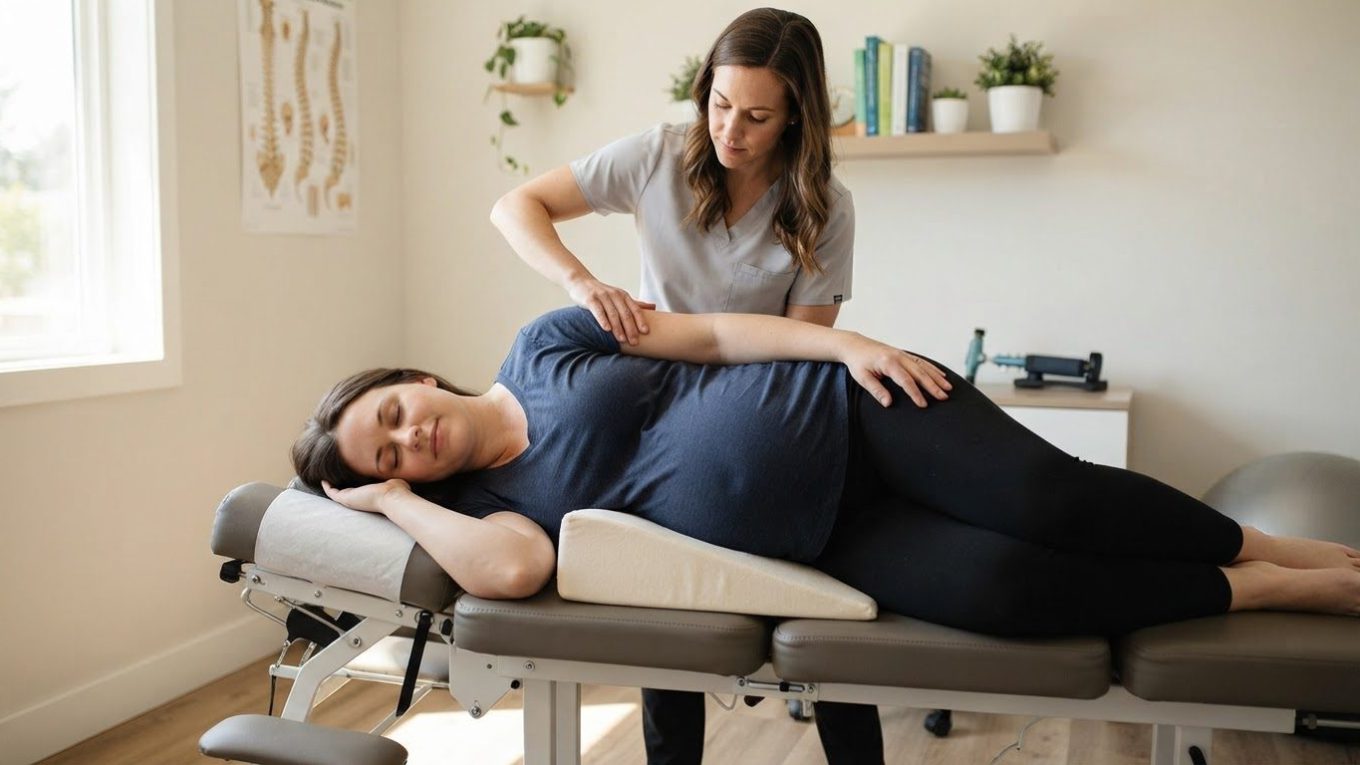
- Gentle spinal, pelvic, or sacral adjustments using pressure and positioning appropriate for pregnancy.
- Side-lying, seated, or supported positions rather than prolonged face-down positioning.
- Soft-tissue work for muscles contributing to hip, buttock, or low-back tension.
- Mobility guidance for the hips, pelvis, and thoracic spine.
- Advice on movement patterns, lifting, sitting, and changing positions.
Some prenatal providers use Webster Technique protocols when clinically appropriate. Webster Technique is generally described as a sacral analysis and adjustment approach intended to address pelvic and surrounding soft-tissue balance. It should not be presented as a guarantee that a fetus will turn, labor will be shorter, or a particular delivery outcome will occur. At Blooming Chiropractic, the practice states that its chiropractors are Webster Technique certified through the International Chiropractic Pediatric Association; patients can still ask how the technique will be selected and adapted to their circumstances.
At-home recommendations may include brief, pregnancy-safe movement instead of long periods in one position, supportive footwear, a pillow between the knees while side-sleeping, and ergonomic changes when sitting. Heat, stretching, exercise, and activity modifications should be discussed with the maternity team when symptoms are significant or the pregnancy has complications.
There is no universal schedule. One patient may benefit from occasional visits, while another may need short-term follow-up during a flare and reassessment as symptoms change. Frequency, pressure, positioning, and technique should be individualized.
Safety, Boundaries, and When to Seek Medical Care
Choose a chiropractor with specific prenatal training and regular experience caring for pregnant patients. Before treatment, disclose pregnancy details, complications, medications, prior injuries, osteoporosis, clotting concerns, and any advice received from the obstetric provider.
Chiropractic care may help manage musculoskeletal discomfort, but it does not treat every cause of leg pain and does not replace prenatal monitoring. Patients should seek prompt medical evaluation for:
- Progressive leg weakness, foot drop, significant or spreading numbness, or difficulty walking.
- Loss of bladder or bowel control or numbness around the inner thighs or groin.
- Fever, unexplained illness, severe or constant pain, or pain following trauma.
- Vaginal bleeding, fluid leakage, regular contractions, or severe abdominal pain.
- Sudden one-sided leg swelling, chest pain, or shortness of breath.
Many patients can receive appropriately modified care during different stages of pregnancy, but the appropriate approach depends on individual health and obstetric guidance. As the abdomen grows, positioning and contact points should change; comfort and communication are essential. A patient should be able to stop or modify any technique that feels painful, threatening, or produces concerning symptoms.
Building a More Comfortable Pregnancy and Birth-Preparation Plan
Sciatica management works best as part of a broader plan focused on function. Useful goals may include walking more comfortably, sleeping with fewer interruptions, reducing pelvic and lower-back strain, and making everyday transitions—such as standing from a chair or turning in bed—easier.
In early pregnancy, care may focus on baseline movement and existing injuries. During the second trimester, changes in posture, activity, and pelvic load often become more noticeable. In the third trimester, positioning, sleep support, and tolerance for walking or standing may require more frequent reassessment. After delivery, treatment may shift toward recovery from labor, feeding posture, lifting mechanics, and persistent nerve or pelvic symptoms.
Addressing muscular tension and pelvic mobility may support comfort during labor preparation, but no clinician should promise a shorter labor, an easier birth, or a specific delivery method. Birth outcomes depend on many maternal, fetal, and medical factors.
Questions to Ask at a Consultation
- What prenatal training and experience do you have?
- How will you determine whether my symptoms are sciatica or another pregnancy-related condition?
- Which techniques and positions will you use during my trimester?
- How will you coordinate with my obstetrician or midwife if symptoms change?
- How often will we reassess, and what improvement should prompt a change in plan?
- Which home movements, sleep supports, or activity modifications are appropriate for me?
A targeted, conservative approach can make pregnancy-related nerve and pelvic discomfort more manageable while preserving appropriate medical oversight. The safest plan is collaborative, symptom-guided, and flexible enough to change as pregnancy—and the patient’s needs—change.