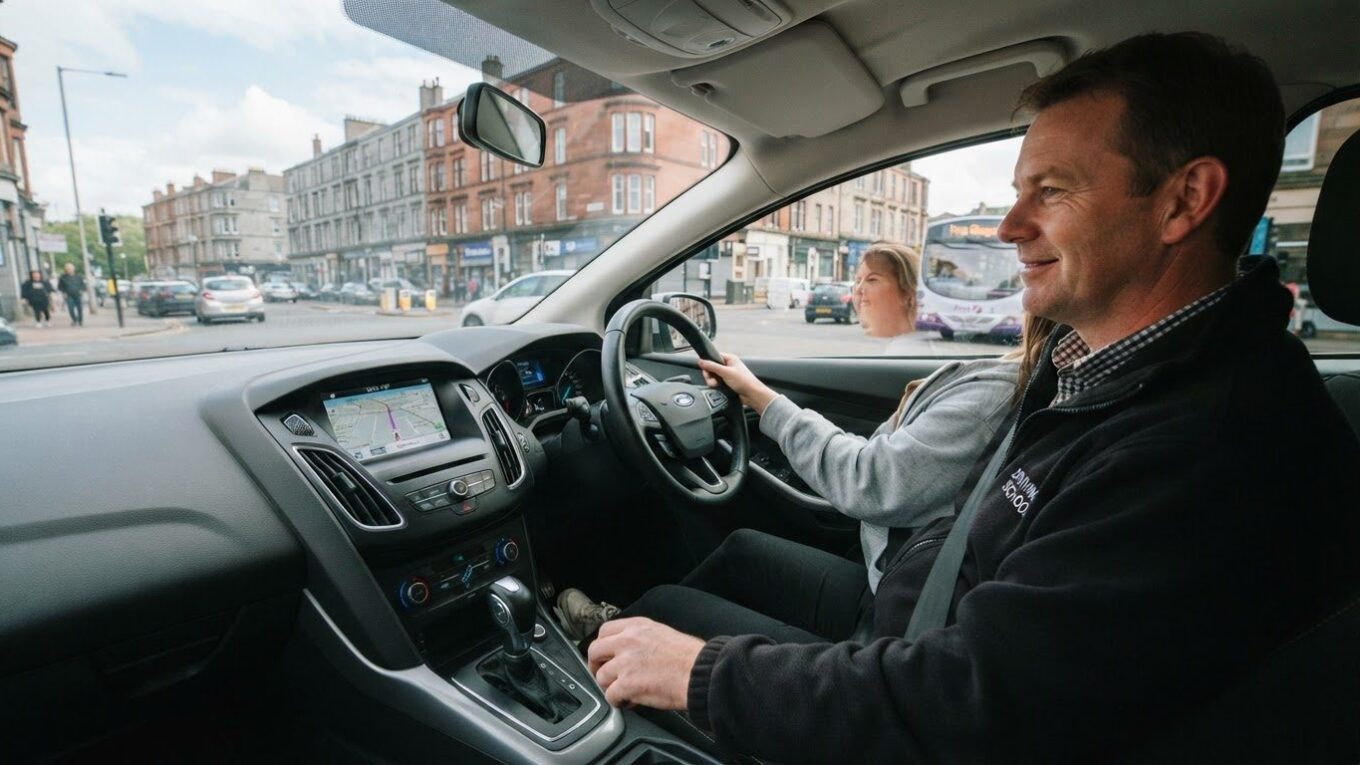
Finding the Right Automatic Driving Lessons in Glasgow
Learning to drive an automatic car in Glasgow is about more than mastering the accelerator and brake. Learners must read complex junctions, anticipate buses and cyclists, select safe lanes and remain composed when traffic, weather or unfamiliar routes create pressure.
The phrase best driving lessons glasgow should mean more than the lowest advertised hourly rate. A worthwhile lesson combines qualified instruction, a suitable dual-controlled vehicle, structured progress and enough exposure to real urban driving conditions.
Before booking, compare teaching standards, vehicle arrangements, lesson policies and instructor availability. topgeardrivingtuition is one local option learners may investigate, but the same practical questions should be asked of any Glasgow driving school.
What Makes Driving Lessons Worth Choosing?
Price is only one part of value. A cheaper lesson can become expensive if the instructor lacks structure, repeats topics unnecessarily or leaves the learner unsure what to practise between sessions. Conversely, a slightly higher hourly rate may represent better value when lessons are focused and progress is measurable.
Look for four fundamentals:
- Instructor quality: Confirm that the instructor is a DVSA-approved driving instructor (ADI), normally identifiable by a green badge. A trainee instructor may display a pink badge, but learners should understand the difference before booking.
- Lesson structure: Each session should have a clear objective, such as moving off safely, meeting traffic, roundabout positioning or independent driving. The instructor should explain what was achieved and what needs further work.
- Vehicle suitability: Automatic cars should be comfortable, easy to see from and appropriately sized for a beginner. Dual controls allow the instructor to intervene safely when necessary.
- Progress tracking: Regular reviews should identify strengths, recurring faults and readiness for more demanding routes. This helps prevent learners paying for repeated practice without a clear reason.
A calm, patient teaching style matters particularly for nervous drivers. Good feedback is specific: rather than saying “that was poor,” an instructor should explain whether the issue involved observation, speed, road position, planning or control. Positive reinforcement is equally important because confidence develops through recognising correct decisions, not merely avoiding mistakes.
Personalised tuition can reduce unnecessary repeat lessons. A learner who receives the right explanation at the right stage is more likely to retain the skill and practise it independently. Ask whether the instructor holds current qualifications and whether the school maintains appropriate safeguarding documentation, including Disclosure Scotland checks where relevant when working with younger learners.
Automatic Lessons for Glasgow’s Real Driving Conditions
Quiet residential streets are useful for initial control practice, but they cannot prepare a learner fully for Glasgow’s traffic. Automatic lessons should progress into the city environment once the learner can operate the car safely without constant prompting.
Important local skills include:
- Approaching busy junctions and traffic-light-controlled crossroads with effective all-round observation.
- Maintaining lane discipline on multi-lane roads, especially when preparing for a turn or joining faster traffic.
- Reading one-way systems, road markings and bus-lane restrictions.
- Negotiating roundabouts while choosing the correct lane and checking mirrors before changing position.
- Passing parked vehicles and managing meeting situations on narrow streets.
- Planning around buses, delivery vehicles, pedestrians and heavy peak-time traffic.
Glasgow’s frequent rain, low winter light and rapidly changing congestion also make hazard perception essential. Learners should practise, where legally and safely possible, in different weather and traffic conditions rather than treating a dry, quiet route as the complete learning environment.
Coverage may extend across Glasgow East and nearby areas including Motherwell, Paisley and Dumbarton, subject to instructor availability. However, learners should confirm the exact pick-up area and whether travel time affects the lesson duration.
A Learning Approach Built Around the Individual
A first-time learner, an experienced driver returning after a long break and someone changing from manual to automatic transmission do not need identical tuition. The instructor should establish the learner’s starting point, confidence, goals, available practice time and preferred pace before setting a programme.
Progressive training commonly moves through:
- Cockpit checks, seating, mirrors and control familiarisation.
- Moving off, stopping, steering, braking and safe use of an automatic gearbox.
- Observation, mirror routines, signalling and appropriate road position.
- Junctions, meeting traffic, pedestrian crossings, roundabouts and lane changes.
- Manoeuvres, including reversing, parking and pulling up on the right where appropriate.
- Independent driving using sat-nav directions, road signs and unfamiliar routes.
- Mock tests, test-centre approaches and correction of persistent faults.
Positive reinforcement should be balanced with calm correction. Nervous learners may benefit from shorter objectives, quiet explanations and gradual exposure to busier roads. Refresher tuition may focus on specific weaknesses such as motorway confidence, parking or urban junctions.
Intensive training can suit someone with a fixed deadline, but it is not automatically faster or cheaper. A demanding schedule may overload a beginner, while a learner with previous experience may benefit from concentrated practice. The instructor should assess whether the proposed timetable is realistic rather than simply selling a large block of hours.
The Cars, Instructor Support and Lesson Experience
A training car should support learning, not add avoidable difficulty. Useful features include:
- Dual accelerator and brake controls, properly maintained and explained to the learner.
- Clear visibility, comfortable seating and controls that are easy to identify.
- Reliable climate control, particularly during Glasgow’s cold, wet conditions.
- A size and driving position that help a beginner judge space accurately.
- Appropriate insurance, servicing and vehicle safety checks.
A school offering both male and female instructors may allow learners to request a preference. That can be especially helpful for people who feel anxious about starting lessons or who need a teaching environment that makes them comfortable.
Consistency is also valuable. Changing instructors frequently can produce conflicting explanations and repeated assessments. One instructor who records development can distinguish a completed topic from a skill that genuinely needs more work.
Professional conduct should include punctuality, preparation, respectful communication and a constructive end-of-lesson review. Before booking, ask:
- Which vehicle model will be used, and can it be changed if necessary?
- Where will lessons start and finish?
- Does travel time count within the paid lesson?
- Are one-hour, two-hour or intensive sessions available?
- What happens if the learner or instructor cancels?
- Are lesson payments refundable, transferable or subject to notice periods?
- Is the instructor a fully qualified ADI or a trainee?
Preparing for a Confident Driving Test and Beyond
Effective test preparation develops safe driving rather than route memorisation. Learners should practise manoeuvres, independent driving, following signs and spoken directions, meeting traffic and handling unfamiliar roads. Glasgow test routes can include complex lane arrangements and busy junctions, but competence must transfer beyond any particular route.
If an examiner gives a direction that cannot be followed safely, the correct response is to continue safely and recover later. Missing a turn is preferable to braking sharply, cutting across lanes or making a sudden manoeuvre. This is both sound test strategy and essential everyday driving judgement.
Lesson frequency should reflect concentration, finances and access to private practice. Weekly sessions provide continuity, while two-hour lessons may offer more time to reach varied roads without spending half the appointment on preparation. Private practice with a suitable accompanying driver can reinforce skills, but it should follow the instructor’s guidance and take place legally and safely.
Readiness should be based on consistent independent performance, not a single impressive lesson. Before booking a test, the learner should be able to manage routine faults without prompts, respond safely to unfamiliar situations and maintain control when traffic becomes demanding.
Prospective learners should finally ask:
- How will progress be assessed and recorded?
- What experience does the instructor have with nervous or returning drivers?
- How much Glasgow city driving is included?
- Can the lesson plan be adapted if progress is faster or slower than expected?
- What evidence will show that the learner is test-ready?
The right automatic driving lessons in Glasgow should leave learners not only prepared for an assessment, but capable of making safe, independent decisions long after passing.